

Michael Sheen as the Stage Manager
Our Town
Welsh National Theatre
January to March 2026
Photo by Helen Murray
110 – Our Town by Thornton Wilder
Podcast: Play in new window | Download
Follow the podcast Apple Podcasts | Spotify | Android | TuneIn | RSS | More
Playwright Edward Albee described Thornton Wilder’s Our Town as “the greatest American play ever written.” In fact Wilder’s quintessential portrait of rural America in a bygone time has somehow transcended its iconic American setting to become a universal meditation on mortality, community, and how we live our individual lives, wherever that may be. The play has been glibly dismissed by some as sentimental and parochial, but its grip is not just emotionally irresistible, it is unexpectedly profound, deepened by its surprisingly radical form and its provocative philosophical themes. As the critic John Lahr put it, the play manages to conjure both “the commonplace and the cosmic”.
Our Town opened on Broadway in February 1938, to mixed critical response but enthusiastic audiences. Its popularity was confirmed by immediate exceptional demand from professional and amateur companies for rights to perform the play – and it has been a staple of school, amateur and stock performance ever since. In fact, according to Lahr writing in the introduction to the Penguin edition of the play, “the play is performed somewhere in the world every day.”
As we record this episode, a new production of the play by the Welsh National Theatre has recently completed sell-out runs in Cardiff, Swansea and London, with Michael Sheen headlining as the Stage Manager, a role that has been performed by Wilder himself, as well as by all-American icons such as Henry Fonda, Paul Newman and Aan Alda.
I’m delighted to be able to add Our Town to The Play Podcast catalogue, and I’m privileged to be joined by someone who knows it exceptionally well. Howard Sherman is the author of “Another Day’s Begun – Thornton Wilder’s Our Town in the 21st Century, in which he not only gives a brief introduction to the origins of the play, but also collates more than 100 personal interviews with theatre artists who have performed in, or produced, the play. The voices of these practitioners provide a fascinating insight into the workings of the play, as well as being a moving tribute to its enduring power.
Howard Sherman
Howard Sherman is the author of Another Day’s Begun: Thornton Wilder’s Our Town in the 21st Century, which was published in January 2021 by Methuen Drama.
As a writer, since 2012 he has been the US columnist and feature writer for The Stage newspaper in London. He was a contributing editor at Stage Directions magazine and a contributing writer at Encore Monthly, and has contributed articles to American Theatre Magazine, National Public Radio, The New York Times, The Wall Street Journal, The Los Angeles Times, and The Guardian.
Howard is presently the managing director of the Baruch Performing Arts Center at Baruch College in Manhattan, a position he has held since March 2022. Previous positions include: Director of the Arts Integrity Initiative at the New School for Drama; Interim Director of the Alliance for Inclusion in the Arts in New York; Executive Director of the American Theatre Wing; Executive Director of the Eugene O’Neill Theater Center in Waterford CT; Managing Director of Geva Theater in Rochester.
Howard has taught and/or guest lectured at the Yale School of Drama, Columbia University, Princeton University, North Carolina School of the Arts, Emerson College, Brooklyn College, Hartt School of Music, SUNY Purchase and University of Connecticut. He also served for several years as an on-site evaluator for the National Endowment for the Arts.
Howard recommended This Story of Yours by John Hopkins.


The Footnotes that accompany our episode on Thornton Wilder’s American classic Our Town include additional notes on Wilder’s approach to staging, his theme of the archaeology of history, and the sacramental tone and message of the play.

The Texts


115 – The Dance of Death by August Strindberg
Podcast: Play in new window | Download
Follow the podcast Apple Podcasts | Spotify | Amazon Music | Android | iHeartRadio | TuneIn | RSS | Follow the podcast
August Strindberg’s The Dance of Death is set in a remote army base on the coast of Sweden, where an army captain and his wife are trapped together in an unhappy marriage. The captain, bitter at his lack of promotion, and his wife, frustrated at having been forced to give up her career as an actress, occupy their empty hours tearing into each other in a brutal dance of mutual cruelty.
Strindberg’s scorching portrait of marital strife was written in 1900, but has had a lasting influence. Arthur Miller dubbed Strindberg, “the mad inventor of modern theatre”, and echoes of his unflinching dissection of marital discord can be seen in the plays of Edward Albee, Tennessee Williams, Eugene O’Neill, and John Osborne.
Sir Richard Eyre adapted and directed a wonderful production of Dance of Death at the Orange Tree Theatre in Richmond upon Thames earlier this year, and I am delighted that Sir Richard joins me in this episode to guide us through Strindberg’s blistering onslaught on marriage.

114 – Love’s Labour’s Lost by William Shakespeare
Podcast: Play in new window | Download
Follow the podcast Apple Podcasts | Spotify | Amazon Music | Android | iHeartRadio | TuneIn | RSS | Follow the podcast
William Shakespeare’s Love’s Labour’s Lost is described on the title page in the first publication of its text in 1598 as “A Pleasant Conceited Comedie.” I imagine that the epithets were intended to highlight the play’s courtly aesthetic, its frothy merry-go-round of courtship, and above all perhaps, its ostentatiously intricate word play. For it is a play rich in the love and perils of language.
I am joined to assay Shakespeare’s conceited comedy by the Artistic Director of the Orange Tree Theatre in Richmond upon Thames, Tom Littler. In the summer of 2026 Tom adapted and directed a magical double bill of Shakespeare, producing Love’s Labour’s Lost and Much Ado About Nothing in repertory, and staging them both ‘en plein air’.
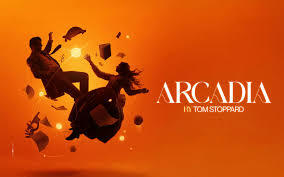
113 – Arcadia by Tom Stoppard
Podcast: Play in new window | Download
Follow the podcast Apple Podcasts | Spotify | Amazon Music | Android | iHeartRadio | TuneIn | RSS | Follow the podcast
Tom Stoppard’s 1993 play, Arcadia, is viewed by many as his finest play, renowned for the breadth of its intellectual interrogations and its formal invention. The play is a structural masterpiece of ideas, as well as a teasing detective story, joyous comedy, and emotionally rich exploration of love and loss.
As we record this episode a wonderful new production of Arcadia is playing at the Duke of York’s theatre in London’s West End, following its acclaimed run at the Old Vic theatre earlier this year. I am delighted to share the challenge and the pleasure of exploring Stoppard’s dazzling drama with the director of the new production, Carrie Cracknell.
0 Comments