Exploring the greatest new and classic plays

SUPPORT OUR PODCAST BY BECOMING A PATRON
CLICK HERE

Love’s Labour’s Lost – Footnotes

Love’s Labour’s Lost – Footnotes

Photo © Marc Brenner

Love’s Labour’s Lost – Footnotes

A Footnote to our episode on William Shakespeare’s Love’s Labour’s Lost with more on the “curious foppery of language” on display in the play. 


Not listened to the episode yet? You’ll find it here.

“A curious foppery of language”
We talked in the podcast about the affected, highly stylised language employed in the play, especially by the young noblemen. The Victorian critic Walter Pater described the self-conscious artifice of their speech as “a curious foppery of language”. The play is full of men who count their eloquence as one of their chief attributes. They indulge in continuous bouts of wit combat – each trying to outdo the other. The rhythms of their exchanges are built from much repetition and punning, where they pick up on what was last said and play on the variable meanings of words. The effect of this banter is enhanced by rhyme being interwoven in sequential lines shared between multiple characters. There is also lots of sexual innuendo of course in the men’s banter. The result is a strong sense that these men inhabit a closed, self-consciously performative world, sharing a private language that we can only observe, and may not even fully understand. This self-referential sense is underscored by characters picking up and repeating each other’s use of words or rhymes.

As we noted in our conversation, 65% of the dialogue in the play is in verse, and two-thirds of that is in rhyme. This elaborate language is mainly employed by the courtiers; the prose in the play is largely spoken by the country people. There is a thematic point to this divide. Shakespeare is satirising the pretension of these young men, particularly when it comes to their approach to love and courtship. I was fortunate enough to attend a talk about the play given by Shakespearean scholar Hester Lees-Jeffries, in which she painted a picture of life in London in the 1590s, and especially of the interests of young men living in the city. Shakespeare himself was a young man in his early thirties when he wrote the play, and Hester pointed out that the theatre audience of the time would have skewed male, in line with the general composition of the population of the city – there were 139 men to 100 women in London in that time. So Elizabethan men were naturally preoccupied by the challenge of finding love and marrying well. The play is therefore holding up a mirror of sorts to Shakespeare’s audience, a somewhat satirical one, showing how men went about love. And one of the things wannabe male lovers did at the time was write love poetry. They wrote Sonnets. Often even just to imaginary lovers. They were partly showing off to each other. And in the play, there are no fewer than 5 standalone sonnets – Berowne’s letter to Rosaline is a sonnet. And when Don Armado believes that he is in love with Jaquenetta, he fears that he will succumb to writing poetry in the accepted form, “for I am sure I will turn sonnet”.

Of course, as Tom pointed out in our conversation the poetry the men produce is not all good. In fact, that is part of the point. Their use of language is not only an affectation, it is also not effective. It fails to communicate honestly or clearly. To use Don Armado’s apt phrase, “the sweet smoke of rhetoric” obscures meaning rather than makes it clear. The misdirected letters are a metaphor for the failure to communicate; and their generic form underlines their lack of personal honesty. The women, of course, disdain the men’s high-flown language, all bemoaning that the letters are too long, and their disguised identities reiterate the point that the men’s notional romantic targets may as well be interchangeable.

To underscore the contrast with the women as the voices of sincerity or common sense, the Princess and Rosaline use the least amount of rhyme of any characters in the play in their speech.  There is little doubt that the women win the “merry war” of wit with the men (to borrow from Much Ado). And it is a war – military metaphors abound. Berowne calls the courtiers to be “affection’s men-at-arms”, love’s soldiers. While Boyet urges the women to “Arm, wenches, arm! Encounters mounted are / Against your peace. Love doth approach disguised,/ Armed in arguments. You’ll be surprised. / Muster your wits, stand in your defence” (5.2.82). The women can also be as deadly, as Boyet again avers, “The tongues of mocking wenches are as keen / As is the razor’s edge invisible.” 2.256-7

The love battle is also framed in the language of the hunt, with literal reference to the King hunting the local deer, along with the customary innuendo around the male’s horns. It is the women, however, who control Cupid’s arrows. I recall that in a production of the play at Shakespeare’s Globe theatre a number of years ago, the women all carried bows over their shoulders. They aim to make the men dance attendance on them. Rosaline vows to taunt and torture Berowne, “That he should be my fool, and I his fate.” 5.2.68

Berowne is finally made to recognise the folly of his ways and his fate, as represented by the required change in his language. He is renowned for his eloquence – “So sweet and voluble is his discourse”. Coleridge described his speech as “logic clothed in rhetoric”, and it often feels like the reasonable argument of his speech is overtaken by his penchant for the lyrical. As Tom pointed out in the podcast, he comes to understand the falsity of his ornate language – and speaks quite plainly of his and his companions’ love. A love that is real and unexpected, compelled by their beauty: Your beauty, ladies, / Hath much deformed us, fashioning our humours / Even to the opposed end of our intents”. Surely one of the challenges that he and his companions must rise to in their trial to win the women in the end will be to abandon their “foppery of language.”

Berowne’s sonnet to Rosaline
Illuminated Quote by Alberto Sangorski

The lady hunters
Love’s Labour’s Lost
Shakespeare’s Globe Theatre, 2009
Photo by John Haynes

The Texts

If you are interested in buying the play text or other related books, we’d be delighted if you choose to purchase them by following the links below. We will earn a small commission on every book you purchase, which helps to keep the podcast going. You will also be supporting an independent bookseller. Thank you.
You might also be interested in …
115 – The Dance of Death by August Strindberg

115 – The Dance of Death by August Strindberg

August Strindberg’s The Dance of Death is set in a remote army base on the coast of Sweden, where an army captain and his wife are trapped together in an unhappy marriage. The captain, bitter at his lack of promotion, and his wife, frustrated at having been forced to give up her career as an actress, occupy their empty hours tearing into each other in a brutal dance of mutual cruelty.

Strindberg’s scorching portrait of marital strife was written in 1900, but has had a lasting influence. Arthur Miller dubbed Strindberg, “the mad inventor of modern theatre”, and echoes of his unflinching dissection of marital discord can be seen in the plays of Edward Albee, Tennessee Williams, Eugene O’Neill, and John Osborne.

Sir Richard Eyre adapted and directed a wonderful production of Dance of Death at the Orange Tree Theatre in Richmond upon Thames earlier this year, and I am delighted that Sir Richard joins me in this episode to guide us through Strindberg’s blistering onslaught on marriage.

114 – Love’s Labour’s Lost by William Shakespeare

114 – Love’s Labour’s Lost by William Shakespeare

William Shakespeare’s Love’s Labour’s Lost is described on the title page in the first publication of its text in 1598 as “A Pleasant Conceited Comedie.” I imagine that the epithets were intended to highlight the play’s courtly aesthetic, its frothy merry-go-round of courtship, and above all perhaps, its ostentatiously intricate word play. For it is a play rich in the love and perils of language.

I am joined to assay Shakespeare’s conceited comedy by the Artistic Director of the Orange Tree Theatre in Richmond upon Thames, Tom Littler. In the summer of 2026 Tom adapted and directed a magical double bill of Shakespeare, producing Love’s Labour’s Lost and Much Ado About Nothing in repertory, and staging them both ‘en plein air’.

113 – Arcadia by Tom Stoppard

113 – Arcadia by Tom Stoppard

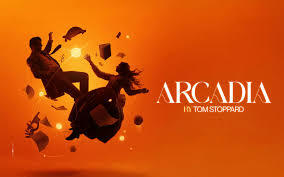
Tom Stoppard’s 1993 play, Arcadia, is viewed by many as his finest play, renowned for the breadth of its intellectual interrogations and its formal invention. The play is a structural masterpiece of ideas, as well as a teasing detective story, joyous comedy, and emotionally rich exploration of love and loss.

As we record this episode a wonderful new production of Arcadia is playing at the Duke of York’s theatre in London’s West End, following its acclaimed run at the Old Vic theatre earlier this year. I am delighted to share the challenge and the pleasure of exploring Stoppard’s dazzling drama with the director of the new production, Carrie Cracknell.

Arcadia – Footnotes

Arcadia – Footnotes

Photo © Marc Brenner

Arcadia – Footnotes

Tom Stoppard’s dramatic masterpiece, Arcadia, is a teasing detective story, a joyous comedy, and an emotionally rich exploration of love and loss. It is also a play of ideas. These Footnotes supplement our main episode on Arcadia, with observations on subjects introduced in the play, including garden design, Fermat’s Last Theorem, Iterated Algorithms and something called Fractals, the Second Law of Thermodynamics and Chaos Theory.

I mentioned in the introduction to our episode that I was daunted by the richness of the ideas woven into the fabric of the play. In fact, the programme published for the run at the Old Vic this year went so far as to include a glossary of notable figures and scientific terms, as well as brief notes on subjects covered in the play. It became apparent in my dialogue with Carrie Cracknell that it would not be possible to do justice to the depth of ideas on display in the play within the confines of our time-limited conversation. I feared that we could get very lost down the rabbit hole of any one of the theories being referenced in the play. However, one cannot properly appreciate the extent of Stoppard’s genius in the construction of this play, without some attempt to apprehend the relevant meanings of these ideas that he specifically introduces. So, at the risk of my misconstruing or oversimplifying any of these concepts, I’d like to dive a bit deeper into the erudition that runs through the play, like the spools of jam that are mixed into Thomasina’s rice pudding.

Not listened to the episode yet? You’ll find it here.

Et in Arcadia Ego
I’d like to start with a relatively straight forward reference – the source and resonance of the title of the play. ‘Arcadia’ refers to a vision of pastoral paradise, and it derives from the Greek province of the same name. The phrase Et in Arcadia ego is the title of 17th century pastoral paintings by Guercino and by Poussin. They may have been inspired by the Latin poet Virgil’s book Eclogues, a collection of ten poems set in Arcadia. The Latin phrase translates as ‘Even in Arcadia, there am I’ or ‘I too was in Arcadia’. When Lady Croom quotes the line in the play, she parses it as “Here I am in Paradise”, referring to the confected perfection of the current gardens of the estate, which her husband is bound on ripping up. The ‘Ego’ in the phrase has often been claimed in this personal sense, with a nostalgic lament about a paradise lost.

The primary meaning may however be that ‘Ego’ or ‘I’ is death – ‘Even in Arcadia, there am I’ – making it a memento mori; a warning that even here in paradise death is inevitable. Septimus archly cites this very meaning when he identifies the guns overheard from the local shoot, as “A calendar of slaughter. ‘Even in Arcadia, there am I.’”

The title has rich resonances therefore, evoking the peaceful beauty of the play’s setting, but also signalling one of the play’s themes, that all is subject to change, and more poignantly perhaps it foreshadows the fate of the central characters.


Et in Arcadia Ego
Nicolas Poussin, 1637-38
Musee du Lourve

Capability Brown gardens at Chatsworth in Derbyshire
Photo: VisitEngland and Rich J Jones

Garden design
Change is certainly a theme in the history of the Arcadian gardens surrounding the great house of Sidley Park. In the play, the Lord of the house has commissioned a landscape gardener named Mr Noakes to overhaul the estate’s grounds, replacing its gently ornamental landscape as designed by Capability Brown with a recreation of a wilder land, complete with rocky crags, man-made waterfalls, picturesque fake ruins, fallen obelisks, and most importantly for the plot of the play, a hermitage. “The Gothic novel expressed in landscape” – as Hannah describes it in the play.

Lady Croom is most upset about the proposed changes, labelling the put-upon new designer, “Culpability Noakes” – a lovely Stoppardian coinage. She prefers the existing design, with its peaceful meadows “on which the right amount of sheep are tastefully arranged”. Bernard suggests at one point that the garden of a great country house is “the real England”, which pastoral archetype Lady Croom associates with the paradise of Arcadia. But of course, this “real England” is a false one, its sanitised version of nature being completely contrived. As Hannah perceptively points out, “English landscape was invented by gardeners imitating foreign painters who were evoking classical authors.”

In fact, the current redesign will be the third major overhaul of the garden, reflecting the changes in the intellectual and artistic world around it through history. The formal, classical lines of the early 18th century garden were previously replaced by Capability Brown, a move which Hannah describes as paralleling the general cultural transition from the Enlightenment to Romanticism – “the decline from thinking to feeling” – from “paradise in the age of reason” to a “setting of cheap thrills and false emotion”.  The developments wrought in the garden mirror the changes alluded to in the sciences, the descent from Newtonian certainty into chaos theory, for example.

Hannah’s explication of the evolution of the garden also reprises one of the thematic threads in the play – the battle between reason and emotion in the human relationships on display. The latter being a source of chaos, as Chloe so pithily points out, “The only thing going wrong is people fancying people who aren’t supposed to be in that part of the plan.” “The attraction that Newton left out”, in Valentine’s immortal line. Which he also aptly connects “all the way back to the apple in the garden”, the original Arcadia.


Fermat’s Last Theorem
One of the first scientific references in the play, is to Fermat’s Last Theorem. Septimus challenges Thomasina to solve Fermat’s mathematical formula, which famously had been stumping mathematicians for over 300 years. French mathematician Pierre de Fermat claimed to have made a mathematical breakthrough in a note scrawled in the margin of his notebook, but failed to publish his proof before he died. The association between Thomasina’s potential genius and Fermat is deftly underlined when Hannah and Bernard are drawn to Thomasina’s mathematical work by a cryptic note in her notebooks.

Septimus also has a playful riff on Fermat when in the context of his explaining “carnal embrace” to Thomasina, he restates the basic algebra of the theorem, “that when x, y and z are whole numbers each raised to power of n, the sum of the first two can never equal the third when n is greater than 2.” Surely he and Stoppard mean this as a suggestive metaphor for the multiple permutations of passion between the characters in the play.


The 1670 edition of Diophantus’s Arithmetica
that includes Fermat’s commentary, referred to as his “Last Theorem”

Iterated Algortihms
What Thomasina is working on in her notebooks is an attempt to repeat what is called an iterated algorithm by hand. The idea of algorithms may perhaps be more familiar to us today in our digital age of AI, but I think Tom Stoppard was ahead of the curve. An iterated algorithm is a mathematical procedure which repeatedly applies the same set of instructions, where the output of one calculation is fed back in as input for the next.

In Arcadia, Valentine tries to use it to model the Sidley Park grouse population, feeding the population of one year back into his model to predict the next year’s population. Valentine also understands that this was Thomasina’s process: “She’s feeding the solution back into the equation, and then solving it again.”  He explains that he would be able to run what she was trying to do through his computer a few million times, to identify patterns in the ongoing process. Thomasina intuits that she is on to something in her iterative process, but as Stoppard himself explained, “The problem was that there were not enough pencils or paper or time to do it often enough. To do it so many times that the pattern emerges.”

And in the end Septimus goes mad continuing Thomasina’s paper algorithm for twenty years living in the hermitage

Fractals
What Thomasina was seeking in her application of algorithms was a mathematical equation that could define the shape of a bluebell or of a leaf. She is exasperated by the limits of classical geometry, which she describes as “nothing but arcs and angles” and which she suggests does not account for the beauty of the natural world. As she says, “mountains are not pyramids and trees are not cones”. Thomasina gathers her work in a document entitled New Geometry of Irregular Forms. In fact, her approach foreshadows what is now called Fractal Geometry, a term that was not coined until 1975 by mathematician Benoit Mandelbrot.

A fractal is a complex, never-ending pattern that repeats itself at different scales, a property known as self-similarity. A fractal object has infinite detail, so that as you zoom in the structure reveals smaller, similar copies of the whole – such as a fern leaf. Mathematicians have developed an iterated function that creates a representation of a fern.

The pattern and beauty of a fern being described in a mathematical formula is a challenging concept. But it is in line with Stoppard’s sympathetic mixing of science and art in the play. Valentine makes Stoppard’s argument that science and art are not binary, when he counters Bernard’s declared preference for poetry over scientific progress: “He’s not against penicillin and he knows I’m not against poetry.” As Stoppard said, “Science and art are more like each other than unlike”, and the play endorses C.P. Snow’s famous exhortation to erase the dogmatic divide between the “Two Cultures”, as he called them.


The Second Law of Thermodynamics
The search for order in the world in the form of mathematical equations is an expression of one of the general themes of the play, the dynamic between order and disorder, or free will and determinism. Valentine points out that according to Newtonian physics you could predict everything to come – “you’d need a computer as big as the universe, but the formula would exist”. Septimus the classical scholar states that time can only go one way: “we must stir our way onward mixing as we go, disorder out of disorder into disorder until pink is complete, unchanging and unchangeable, and we are done with it forever.”

Valentine elaborates that this one-way street concept is connected to the idea or definition of Entropy – which is the degree of disorder or randomness in a system – and that according to the second law of thermodynamics entropy always increases with time. He cites the principle that Hannah’s tea can only get cold as an illustration of this law, which Thomasina understood ahead of her time – “the heat equation…goes only one way”, she explains to Septimus.

Taken to its ultimate conclusion Valentine suggests that the law projects the dark end of the universe. A vision Septimus poetically expresses, “When we have found all the mysteries and lost all the meaning, we will be alone, on an empty shore.”


Chaos Theory
It is a bleak principle. But it may not be that simple – if that is simple – because in another twist, we do recognise some order, some patterns in the inexorable process of dissipation. Which may be where ‘Chaos Theory’ comes into the philosophical mix in the play. Stoppard was inspired by James Gleick’s 1987 book on chaos theory in which Gleick tells us that chaos theory paradoxically identifies mathematical structures within random systems, what are called ‘self-similarities’ – patterns repeating. And of course, within the structure of the play, things from the past are repeating in similar forms.

Stoppard described chaos theory as “a reconciliation between the idea of things not being random on the one hand and yet unpredictable on the other.” It “attempts to systemise that which appears to function outside of any system.” And it applies to any dynamic system where apparent randomness is found to contain order.

As Gleick outlines, ‘mathematical equations could model chaos – tiny differences in inputs could quickly become overwhelming differences in output.’ In systems like the weather where events and patterns ‘almost repeated themselves but never quite succeeded”. A phenomenon simplistically described by the metaphor that the flap of a butterfly’s wings could change the weather.

Metaphorically, in some ways these abstract sounding theories can be applied to our understanding of the world. For example, one small detail in our interpretation of the past will yield a completely different conclusion about what we think occurred, as it did in Bernard’s misinterpretation of the past. Or minute variations in our behaviour at any one time can produce wildly different outcomes in our love affairs or in our lives.

As Valentine outlines it “The unpredictable and the predetermined unfold together to make everything the way it is. It’s how nature creates itself, on every scale, the snowflake and the snowstorm.”

One might also observe that the structure of the play also seems to go from order to some form of chaos, with the strictures of time that separate the two worlds dissolving. The swirls of jam stirred together, disorder out of disorder into disorder.

The Texts
If you are interested in buying the play text or other related books, we’d be delighted if you choose to purchase them by following the links below. We will earn a small commission on every book you purchase, which helps to keep the podcast going. You will also be supporting an independent bookseller. Thank you.
You might also be interested in …
115 – The Dance of Death by August Strindberg

115 – The Dance of Death by August Strindberg

August Strindberg’s The Dance of Death is set in a remote army base on the coast of Sweden, where an army captain and his wife are trapped together in an unhappy marriage. The captain, bitter at his lack of promotion, and his wife, frustrated at having been forced to give up her career as an actress, occupy their empty hours tearing into each other in a brutal dance of mutual cruelty.

Strindberg’s scorching portrait of marital strife was written in 1900, but has had a lasting influence. Arthur Miller dubbed Strindberg, “the mad inventor of modern theatre”, and echoes of his unflinching dissection of marital discord can be seen in the plays of Edward Albee, Tennessee Williams, Eugene O’Neill, and John Osborne.

Sir Richard Eyre adapted and directed a wonderful production of Dance of Death at the Orange Tree Theatre in Richmond upon Thames earlier this year, and I am delighted that Sir Richard joins me in this episode to guide us through Strindberg’s blistering onslaught on marriage.

114 – Love’s Labour’s Lost by William Shakespeare

114 – Love’s Labour’s Lost by William Shakespeare

William Shakespeare’s Love’s Labour’s Lost is described on the title page in the first publication of its text in 1598 as “A Pleasant Conceited Comedie.” I imagine that the epithets were intended to highlight the play’s courtly aesthetic, its frothy merry-go-round of courtship, and above all perhaps, its ostentatiously intricate word play. For it is a play rich in the love and perils of language.

I am joined to assay Shakespeare’s conceited comedy by the Artistic Director of the Orange Tree Theatre in Richmond upon Thames, Tom Littler. In the summer of 2026 Tom adapted and directed a magical double bill of Shakespeare, producing Love’s Labour’s Lost and Much Ado About Nothing in repertory, and staging them both ‘en plein air’.

113 – Arcadia by Tom Stoppard

113 – Arcadia by Tom Stoppard

Tom Stoppard’s 1993 play, Arcadia, is viewed by many as his finest play, renowned for the breadth of its intellectual interrogations and its formal invention. The play is a structural masterpiece of ideas, as well as a teasing detective story, joyous comedy, and emotionally rich exploration of love and loss.

As we record this episode a wonderful new production of Arcadia is playing at the Duke of York’s theatre in London’s West End, following its acclaimed run at the Old Vic theatre earlier this year. I am delighted to share the challenge and the pleasure of exploring Stoppard’s dazzling drama with the director of the new production, Carrie Cracknell.