Exploring the greatest new and classic plays

SUPPORT OUR PODCAST BY BECOMING A PATRON
CLICK HERE

087 – Look Back in Anger by John Osborne

087 – Look Back in Anger by John Osborne

Billy Howle as Jimmy Porter
and Ellora Torchia as Alison
Look Back in Anger
Almeida Theatre, London, September 2024
Photo by Marc Brenner

087 – Look Back in Anger by John Osborne

John Osborne’s Look Back in Anger is one of the landmark plays of twentieth century British theatre. Since its premiere at the Royal Court theatre in May 1956, it has been defined as marking a breakthrough in dramatic style and subject matter, its frank depiction of a generation of disaffected youth and its working-class setting inspiring a group of writers who would also be labelled angry young men. In the words of the writer Alan Sillitoe, in Look Back in Anger, “John Osborne didn’t just contribute to British theatre, he set off a landmine…and blew most of it up.”

In the nearly eighty years since its premiere, the seminal role of the volatile Jimmy Porter has attracted many renowned actors, including Michael Sheen, Kenneth Branagh, and David Tennant, and as we record this episode the first revival in London for twenty-five years is on stage at the Almeida theatre, directed by Atri Banerjee, and with Billy Howle playing Jimmy.

Given the iconic reputation of this play, I am very keen to explore how well it stands the test of time. Is Jimmy’s dangerous anger still relatable, or even acceptable?

I’m very glad to have not one but two experts who are well qualified to help us address this question and more. First, is Dan Rebellato, Professor of Contemporary Theatre at Royal Holloway, University of London, and author of 1956 and All That: The Making of Modern British Drama, which takes a forensic look at how Look Back in Anger emerged in its time. Dan has appeared on the podcast three times previously, having joined me on our very first episode on A Doll’s House, as well as on our episodes on Terence Rattigan’s The Deep Blue Sea and Chekhov’s The Seagull.

My second guest is the director of the current revival of Look Back in Anger at the Almeida here in London, Atri Banerjee

Dan Rebellato
Dan Rebellato is Professor of Contemporary Theatre at Royal Holloway, University of London. Dan is the author of 1956 and All That: The Making of Modern British Drama, as well as a number of other books on contemporary British theatre. He is also a playwright in his own right, having written at least 19 stage plays and numerous radio plays, including most recently an adaptation of Charles Dickens’ Our Mutual Friend, for BBC Radio 4.
Recommended Play
Dan recommended Boys on the Verge of Tears by Sam Grabiner.  
Atri Banerjee

Atri Banerjee has previously been a member of the Almeida Theatre’s Resident Director Scheme, where he directed Name, Place, Animal, Thing (as part of Six Artists in Search of a Play). He is also a recipient of the 2022-24 Peter Hall Bursary at the National Theatre, Creative Associate at the Gate Theatre, and was previously Trainee Director at the Royal Exchange Theatre, Manchester.

His other directing credits include: Julius Caesar for the RSC, The Glass Menagerie at the Royal Exchange Theatre, in Manchester, the Rose Theatre Kingston and on UK tour; and Hobson’s Choice at the Royal Exchange for which he won The Stage Debut Award for Best Director.  Atri is also a Trustee of the Regional Theatre Young Directors’ Scheme.

Recommended Play
Atri recommended Faith Healer by Brian Friel – (eee Episode 043 – Faith Healer )
Become a Patron!
Since I launched The Play Podcast in April 2020, I have managed to eschew any form of advertising or sponsorship, and I would like to continue to produce the podcast without doing so. I therefore invite you to help me to continue to make the podcast by becoming a Patron. Additional benefits available to Patrons include Footnotes on the plays covered in the podcast, as well as early access to The Play Review. For details click here Thank you very much for listening and for your support. Douglas
The Texts
If you are interested in buying the play text or other related books, we’d be delighted if you choose to purchase them from our selected partners Bookshop.org and Blackwell’s. Not only will you be supporting independent booksellers, we will also earn a small commission on every book you purchase, which helps to keep the podcast going. Click on the cover to buy from our chosen partner. Thank you.
You might also be interested in …
115 – The Dance of Death by August Strindberg

115 – The Dance of Death by August Strindberg

August Strindberg’s The Dance of Death is set in a remote army base on the coast of Sweden, where an army captain and his wife are trapped together in an unhappy marriage. The captain, bitter at his lack of promotion, and his wife, frustrated at having been forced to give up her career as an actress, occupy their empty hours tearing into each other in a brutal dance of mutual cruelty.

Strindberg’s scorching portrait of marital strife was written in 1900, but has had a lasting influence. Arthur Miller dubbed Strindberg, “the mad inventor of modern theatre”, and echoes of his unflinching dissection of marital discord can be seen in the plays of Edward Albee, Tennessee Williams, Eugene O’Neill, and John Osborne.

Sir Richard Eyre adapted and directed a wonderful production of Dance of Death at the Orange Tree Theatre in Richmond upon Thames earlier this year, and I am delighted that Sir Richard joins me in this episode to guide us through Strindberg’s blistering onslaught on marriage.

114 – Love’s Labour’s Lost by William Shakespeare

114 – Love’s Labour’s Lost by William Shakespeare

William Shakespeare’s Love’s Labour’s Lost is described on the title page in the first publication of its text in 1598 as “A Pleasant Conceited Comedie.” I imagine that the epithets were intended to highlight the play’s courtly aesthetic, its frothy merry-go-round of courtship, and above all perhaps, its ostentatiously intricate word play. For it is a play rich in the love and perils of language.

I am joined to assay Shakespeare’s conceited comedy by the Artistic Director of the Orange Tree Theatre in Richmond upon Thames, Tom Littler. In the summer of 2026 Tom adapted and directed a magical double bill of Shakespeare, producing Love’s Labour’s Lost and Much Ado About Nothing in repertory, and staging them both ‘en plein air’.

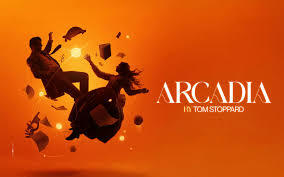
113 – Arcadia by Tom Stoppard

113 – Arcadia by Tom Stoppard

Tom Stoppard’s 1993 play, Arcadia, is viewed by many as his finest play, renowned for the breadth of its intellectual interrogations and its formal invention. The play is a structural masterpiece of ideas, as well as a teasing detective story, joyous comedy, and emotionally rich exploration of love and loss.

As we record this episode a wonderful new production of Arcadia is playing at the Duke of York’s theatre in London’s West End, following its acclaimed run at the Old Vic theatre earlier this year. I am delighted to share the challenge and the pleasure of exploring Stoppard’s dazzling drama with the director of the new production, Carrie Cracknell.