Exploring the greatest new and classic plays

SUPPORT OUR PODCAST BY BECOMING A PATRON
CLICK HERE

Emma Parker

Emma Parker

Emma Parker

Dr Emma Parker is an Associate Professor of English at the University of Leicester, where she works on Twentieth Century and contemporary literature, and has a special interest in gender and sexuality.

Her special engagement with Joe Orton includes her penning the excellent introduction to the 50th anniversary edition of Entertaining Mr Sloane, published by Methuen Drama in 2014, as well essays on Orton and Shakespeare, and on Orton and his connections with the city of Leicester. She is currently writing a book called Joe Orton and the Queer Art of Offence.

Recommended Play(s)

Emma recommended Prima Facie and Inter Alia by Susie Miller.


107 – Entertaining Mr Sloane by Joe Orton

107 – Entertaining Mr Sloane by Joe Orton

Tamzin Outhwaite as Kath
Entertaining Mr Sloane
Young Vic Theatre, London, September 2025
Photo by Ellie Kurttz

107 – Entertaining Mr Sloane by Joe Orton

The curtain rises on the lounge of a modest house in a working-class neighbourhood in England in the early 1960s. A young man is being shown around a house with a view to his renting a room. The middle-aged landlady seems keen for the man to accept the offer; indeed, he senses opportunities in her suggestive invitation. The lodger, Mr Sloane, soon occupies pride of place in the house, playing off his landlady and her controlling brother in a slippery game of sexual sparring, a gambit that takes a deadly turn when the cuckoo in the family nest lashes out.

This is Joe Orton’s outrageous 1964 sexual and social farce, Entertaining Mr Sloane. With this play Orton burst on to the dramatic scene with his unique blend of iconoclastic social satire and provocative sexual comedy, like a ramped-up Oscar Wilde let loose in the emerging age of free love. It may be that Joe Orton is now remembered as much for his rebellious life and his violent death than for his plays, such as Entertaining Mr Sloane, Loot and What the Butler Saw, particularly following the publication of John Lahr’s biography, Prick up your Ears, which also spawned the 1987 film of the same name written by Alan Bennett and starring Gary Oldman.

When Entertaining Mr Sloane first played in London and New York, it offended many established critics. In response to the outrage in the press, the play’s producers ran ads promoting the play featuring the warning, “this play is not suitable for the narrow-minded.”

I have long wanted to cover Orton on the podcast, and I was prompted to start with this play by the recent revival at the Young Vic theatre here in London. I am joined to review Orton’s shameless black comedy by an Orton enthusiast and expert, Dr Emma Parker, Associate Professor of English at the University of Leicester,


Dr Emma Parker

Dr Emma Parker is an Associate Professor of English at the University of Leicester, where she works on Twentieth Century and contemporary literature, and has a special interest in gender and sexuality. Her special engagement with Joe Orton includes her penning the excellent introduction to the 50th anniversary edition of Entertaining Mr Sloane, published by Methuen Drama in 2014, as well essays on Orton and Shakespeare, and on Orton and his connections with the city of Leicester. She is currently writing a book called Joe Orton and the Queer Art of Offence.

Recommended Play

Emma recommended Prima Facie and Inter Alia by Susie Miller.

Photo © Marc Brenner
We have footnotes for this episode …

The Footnotes that accompany our episode on Joe Orton’s classic black comedy, Entertaining Mr Sloane, include additional notes on Orton’s alter-ego Edna Welthorpe, the language of keeping up appearances, Sloane’s lack of innocence, and the character of Kemp.

Become a Patron!
Since I launched The Play Podcast in April 2020, I have managed to eschew any form of advertising or sponsorship, and I would like to continue to produce the podcast without doing so. I therefore invite you to help me to continue to make the podcast by becoming a Patron. Additional benefits available to Patrons include Footnotes on the plays covered in the podcast, as well as early access to The Play Review. For details click here Thank you very much for listening and for your support. Douglas
The Texts
If you are interested in buying the play text or other related books, we’d be delighted if you choose to purchase them from our selected partners Bookshop.org and Blackwell’s. Not only will you be supporting independent booksellers, we will also earn a small commission on every book you purchase, which helps to keep the podcast going. Click on the cover to buy from our chosen partner. Thank you.
You might also be interested in …
115 – The Dance of Death by August Strindberg

115 – The Dance of Death by August Strindberg

August Strindberg’s The Dance of Death is set in a remote army base on the coast of Sweden, where an army captain and his wife are trapped together in an unhappy marriage. The captain, bitter at his lack of promotion, and his wife, frustrated at having been forced to give up her career as an actress, occupy their empty hours tearing into each other in a brutal dance of mutual cruelty.

Strindberg’s scorching portrait of marital strife was written in 1900, but has had a lasting influence. Arthur Miller dubbed Strindberg, “the mad inventor of modern theatre”, and echoes of his unflinching dissection of marital discord can be seen in the plays of Edward Albee, Tennessee Williams, Eugene O’Neill, and John Osborne.

Sir Richard Eyre adapted and directed a wonderful production of Dance of Death at the Orange Tree Theatre in Richmond upon Thames earlier this year, and I am delighted that Sir Richard joins me in this episode to guide us through Strindberg’s blistering onslaught on marriage.

114 – Love’s Labour’s Lost by William Shakespeare

114 – Love’s Labour’s Lost by William Shakespeare

William Shakespeare’s Love’s Labour’s Lost is described on the title page in the first publication of its text in 1598 as “A Pleasant Conceited Comedie.” I imagine that the epithets were intended to highlight the play’s courtly aesthetic, its frothy merry-go-round of courtship, and above all perhaps, its ostentatiously intricate word play. For it is a play rich in the love and perils of language.

I am joined to assay Shakespeare’s conceited comedy by the Artistic Director of the Orange Tree Theatre in Richmond upon Thames, Tom Littler. In the summer of 2026 Tom adapted and directed a magical double bill of Shakespeare, producing Love’s Labour’s Lost and Much Ado About Nothing in repertory, and staging them both ‘en plein air’.

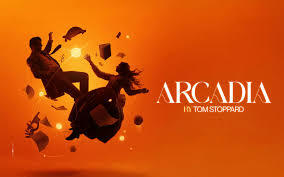
113 – Arcadia by Tom Stoppard

113 – Arcadia by Tom Stoppard

Tom Stoppard’s 1993 play, Arcadia, is viewed by many as his finest play, renowned for the breadth of its intellectual interrogations and its formal invention. The play is a structural masterpiece of ideas, as well as a teasing detective story, joyous comedy, and emotionally rich exploration of love and loss.

As we record this episode a wonderful new production of Arcadia is playing at the Duke of York’s theatre in London’s West End, following its acclaimed run at the Old Vic theatre earlier this year. I am delighted to share the challenge and the pleasure of exploring Stoppard’s dazzling drama with the director of the new production, Carrie Cracknell.