

The Hills of California – Footnotes
The Footnotes to our episode on Jez Butterworth’s play The Hills of California contain more on the traumatic relationship between Veronica and Joan, and on the autobiographical sources of key elements in the play.
Not listened to the episode yet? You’ll find it here.
Veronica and Joan
The central axis of the play is the relationship between Veronica and Joan, which is so terribly and irrevocably transformed by what happened to Joan when she auditioned alone for the American agent. We can only surmise what went on in Mississippi, the room upstairs where she went to sing for Luther St John, or about the awful stress between Joan and Veronica that must have followed that day, culminating in Joan’s leaving for America at a very young age. The rupture between mother and daughter was so severe that over the next twenty years Joan never replied to the more than one hundred letters that Veronica wrote to her, nor ever returned to see her mother, until her arrival in the final act of the play.
It is clear from several facts that we learn during the play, that Veronica was tortured all of her life by her part in what happened to Joan, and the loss of any relationship with her daughter, for example. As we noted in the podcast, Jillian reveals that Veronica was prone to excessive drinking. As Veronica lies dying, she is desperate to make some final apology or reconciliation with her daughter. She has asked Jillian to petition Joan to come to see her, and there is a piercing moment when out of nowhere we hear Veronica call out pitifully for Joan from upstairs. Jillian also tells Joan that in a fit of remorse and self-loathing Veronica told her the truth about what happened all those years ago. She said “I am not a mother. I am a thing with no soul. If Joan has a soul it’s no thanks to me. I deserve no pity. I deserve no pardon. For I am a monster. And death is my only hope.” The sins of the mother do seem to have been visited upon her daughter, because from what we see of Joan, sadly it appears that her soul has been damaged by her mother’s betrayal.
As Sean and I discussed in our conversation, the doubling of the casting of Laura Donnelly as both Veronica and Joan in the stage production, highlights this fateful lineage. There are a number of indications that even from the beginning Veronica and her eldest daughter were closely bound, partly perhaps because they were alike. Jillian volunteers in fact that Veronica said that Joan was most like her, and more than one of the daughters suggest that Joan was Veronica’s favourite. She was clearly attractive, with a bold, even rebellious spirit. She stole cigarettes from the local shop and dared to smoke in the house against her mother’s strict rule. She was probably the most talented of the girls, but also prone to be distracted by worldly things, such as boys. One can imagine, I think, that Veronica too was not shy with men, given her history with the girl’s vanishing father, or fathers.
And finally, of course, like her mother, Joan ends up as a single mother. There is an epigraph printed in the front of the published text of the play which quotes a few lines from a song by Joni Mitchell called Little Green, which recounts the real-life story of the singer having a baby as a young woman after she had left home and giving it up for adoption:
Child with a child pretending
Weary of lies you are sending home
So you sign all the papers in the family name
You’re sad and you’re sorry, but you’re not ashamed
Little Green, have a happy ending.
Joan wishes her ‘little green’ a happy ending.

Laura Donnelly as Veronica, and
Lara Mcdonnell as young Joan
Harold Pinter theatre, London, February 2024
Photo by Mark Douet

Joni Mitchell in the 1970s
Photo by Joel Bernstein

Jez Butterworth interview on BBC Newsnight
11th October 2017
Watch here.
Autobiographical sources
Sean mentioned in the podcast that like one of the stories Veronica told about the girls’ father, Jez Butterworth’s own father landed on the beaches of Normandy on D-Day. The setting of the play in Blackpool is also a nod to his father, who took the family on holiday there when Butterworth was young. There are several other more substantial autobiographical sources for elements in the play.
First the central event of Joan’s abuse by the older American music agent has its roots very specifically in the behaviour of the disgraced producer Harvey Weinstein. Butterworth actually worked with Weinstein in 2001 on the film Birthday Girl, which he co-wrote and directed. Butterworth said of that time, “I was meeting actresses in California who wanted to do my film but would not talk to me because they’d had encounters with him.”
Then in 2017, as the accusations against Weinstein mounted, Butterworth read out an emotive, open letter on the BBC’s Newsnight programme, urging Weinstein to “think of all those little 11-year-old girls, over decades, whose singular talents you have taken advantage of, whose dreams you have decisively and for ever defined….My daughter is 11 years old, and all her life has dreamed of being a performer. She attends a local drama group, and loves to sing, dance and act.” This was clearly a hugely emotive and personal issue for the playwright and father of young daughters.
The final days of Veronica’s life and the coming together of the sisters to say goodbye, may have its origins in Butterworth’s own loss of his sister, Joanna, who died from brain cancer in 2012 at the age of 46. She moved into a cottage next door to Butterworth in her final months, so he witnessed first-hand how a person faces death. ““She lived and died in that cottage. And so people kept coming into the house to see her. What happens in 24 hours in this play happened over six months.”
As with any great art, it is not the original facts that count, but how the creator responds to them to produce something new and richly resonant.

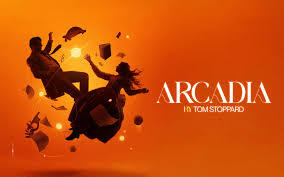
113 – Arcadia by Tom Stoppard
Published 24th August
Tom Stoppard’s 1993 play, Arcadia is viewed by many as his finest play, renowned for the breadth of its intellectual interrogations and its formal invention. The play is a structural masterpiece of ideas, as well as a teasing detective story, joyous comedy, and emotionally rich exploration of love and loss.
As we record this episode a wonderful new production of Arcadia is playing at the Duke of York’s theatre in London’s West End, following its acclaimed run at the Old Vic theatre earlier this year. I am delighted to share the challenge and the pleasure of exploring Stoppard’s dazzling drama with the director of the new production, Carrie Cracknell.

112 – Glengarry Glen Ross by David Mamet
Podcast: Play in new window | Download
Follow the podcast Apple Podcasts | Spotify | Amazon Music | Android | iHeartRadio | TuneIn | RSS | Follow the podcast
David Mamet’s modern American classic, Glengarry Glen Ross, is a blistering commentary on the cut-throat reality of the American dream, and its poisonous impact on those who have bought into the myth and machismo of that dream. The play had its world premiere in the small Cottesloe theatre at the National Theatre in London in September 1983, and was first performed in New York the following year, winning the Pulitzer Prize for Drama. Mamet also wrote the extended screenplay for the star-studded 1992 film version.
As we recorded this episode a new production of the play was playing at the Old Vic theatre in London, with an all-female cast. This is a particularly provocative idea, because one of the primary themes of this play is masculine identity, and the salesmen in this Chicago office do not hold back in their display of machismo.
To explore Mamet’s unflinching slice of 1980s dog-eat-dog capitalism, I am joined by arts journalist Mark Lawson.

111 – The Resistible Rise of Arturo Ui by Bertolt Brecht
Podcast: Play in new window | Download
Follow the podcast Apple Podcasts | Spotify | Amazon Music | Android | iHeartRadio | TuneIn | RSS | Follow the podcast
Bertolt Brecht’s ‘gangster spectacle’, The Resistible Rise of Arturo Ui, is both an exuberant and funny piece of theatre, and a chillingly topical political satire. Set in the 1930s Chicago of Al Capone, Brecht presents a parody of the rise of Hitler through the character of the gangster Arturo Ui. The play is a universal cry for vigilance against the rise of unscrupulous, populist leaders who threaten democratic societies and global peace.
As we recorded this episode a new production of the play by the Royal Shakespeare Company was playing in Stratford-upon-Avon, starring Mark Gatiss as the title character.
I am delighted to be joined by both the show’s translator, playwright Stephen Sharkey, and by Brecht scholar, Professor Tom Kuhn, to guide us through Brecht’s political parody.

0 Comments