Exploring the greatest new and classic plays

SUPPORT OUR PODCAST BY BECOMING A PATRON
CLICK HERE

050 – Jerusalem, by Jez Butterworth

050 – Jerusalem, by Jez Butterworth

Jerusalem at the Apollo Theatre, London 2022
Charlotte O’Leary – Tanya
Mark Rylance – Johnny ‘Rooster’ Byron
Mackenzie Crook – Ginger
Kemi Awoderu – Pea
Ed Kear – Davey
Photo by Simon Annand


050 – Jerusalem, by Jez Butterworth

Jez Butterworth’s play Jerusalem opens with the recitation of two verses of the patriotic English hymn penned by William Blake. As the title and the opening would suggest, the play is an exploration of English identity, but it approaches it through a strikingly singular lens – that of the character of Johnny ‘Rooster’ Byron, an anarchic, anti-hero who is a thorn in the side of the established authorities and many of the local residents of the fictional west-country town of Flintock. Byron’s caravan squats illegally in Rooster Wood, and local youth come to him seeking drugs, drink and escape from their constrictive lives, in the way of successive generations of young people. Rooster represents a practical challenge to the peace of the town, and to the idea and values of modern English society.

Jerusalem was greeted by extraordinary acclaim when it premiered at the Royal Court theatre in London in 2009. The rapturous response to that production was directed at both the play and the astounding performance by Mark Rylance in the lead role of Rooster Byron. Jerusalem became a landmark theatrical event, acquiring a kind of mythical status as one of those once-in-a-lifetime moments in live theatre for those who were lucky enough to have been there. As it turns out, it was not a singular moment, because the show has been revived this year in London’s West End with almost entirely the same cast, including Rylance, and directed once again by Ian Rickson. It is appropriate that we mark the 50th episode of our podcast with a play that is undoubtedly one of the high-water marks of our time. The revival provides us another chance not only to revisit or discover this sensational theatrical experience, but also to explore the enduring qualities of the play itself. What is it about this text that weaves such magic upon us?

To answer this question and more about Jerusalem, I am joined today by someone who has been fortunate enough to have seen both incarnations of the play, and also studied the work of Jez Butterworth in great depth. He is David Ian Rabey, who is Emeritus Professor of Theatre and Theatrical Practice at Aberystwyth University where he taught for 35 years. He is also the author of The Theatre and Films of Jez Butterworth, published by Bloomsbury in 2015.

David Ian Rabey
David Ian Rabey is a dramatist, director, performer and Emeritus Professor of Theatre and Theatre Practice at Aberystwyth University, where he taught for 35 years, until 2020. Prior to this, he started his career as Lecturer in English and Drama at the University of Dublin, Trinity College.

David has published numerous books on modern British and Irish theatre, including Theatre Time and Temporality (2016), English Drama Since 1940 (2003), and in-depth studies of specific dramatists: The Theatre and Films of Jez Butterworth (2015), Howard Barker: Ecstasy and Death (2009), David Rudkin: Sacred Disobedience (1997), Howard Barker: Politics and Desire (1989) and, most recently, Alistair McDowall’s POMONA (2018). He has published additional essays on these dramatists, and others, including: debbie tucker green, Ed Thomas, Ron Hutchinson; and on contemporary Gothic drama.

He is Artistic Director of Lurking Truth/Gwir sy’n Llechu Theatre Company, for which he has written six plays, the first four of which are published in the volumes: The Wye Plays (2004) and Lovefuries (2008). A third volume is intended.

Recommended Play

David recommended Pomona by Alistair McDowell

Photo © Marc Brenner
We have footnotes for this episode …

The Footnotes to our episode on Jerusalem include thoughts on the choice of Byron for Rooster’s surname, his retinue of Lost Boys, and the wonders of the stagecraft in the play and London production.

Patreon Page

BECOME A PATRON!

Since I launched The Play Podcast in April 2020, I have managed to eschew any form of advertising or sponsorship, and I would like to continue to produce the podcast without doing so. I therefore invite you to help me to continue to make the podcast by becoming a Patron.
Additional benefits available to Patrons include Footnotes on the plays covered in the podcast, as well as exclusive access to The Play Review.

For details click here

Thank you very much for listening and for your support.
Douglas

The Texts
If you are interested in buying the play text or other related books, we’d be delighted if you choose to purchase them from our selected partners Bookshop.org and Blackwell’s. Not only will you be supporting independent booksellers, we will also earn a small commission on every book you purchase, which helps to keep the podcast going. Click on the cover to buy from our chosen partner. Thank you.
You might also be interested in …
115 – The Dance of Death by August Strindberg

115 – The Dance of Death by August Strindberg

August Strindberg’s The Dance of Death is set in a remote army base on the coast of Sweden, where an army captain and his wife are trapped together in an unhappy marriage. The captain, bitter at his lack of promotion, and his wife, frustrated at having been forced to give up her career as an actress, occupy their empty hours tearing into each other in a brutal dance of mutual cruelty.

Strindberg’s scorching portrait of marital strife was written in 1900, but has had a lasting influence. Arthur Miller dubbed Strindberg, “the mad inventor of modern theatre”, and echoes of his unflinching dissection of marital discord can be seen in the plays of Edward Albee, Tennessee Williams, Eugene O’Neill, and John Osborne.

Sir Richard Eyre adapted and directed a wonderful production of Dance of Death at the Orange Tree Theatre in Richmond upon Thames earlier this year, and I am delighted that Sir Richard joins me in this episode to guide us through Strindberg’s blistering onslaught on marriage.

114 – Love’s Labour’s Lost by William Shakespeare

114 – Love’s Labour’s Lost by William Shakespeare

William Shakespeare’s Love’s Labour’s Lost is described on the title page in the first publication of its text in 1598 as “A Pleasant Conceited Comedie.” I imagine that the epithets were intended to highlight the play’s courtly aesthetic, its frothy merry-go-round of courtship, and above all perhaps, its ostentatiously intricate word play. For it is a play rich in the love and perils of language.

I am joined to assay Shakespeare’s conceited comedy by the Artistic Director of the Orange Tree Theatre in Richmond upon Thames, Tom Littler. In the summer of 2026 Tom adapted and directed a magical double bill of Shakespeare, producing Love’s Labour’s Lost and Much Ado About Nothing in repertory, and staging them both ‘en plein air’.

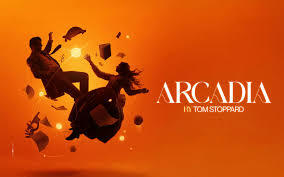
113 – Arcadia by Tom Stoppard

113 – Arcadia by Tom Stoppard

Tom Stoppard’s 1993 play, Arcadia, is viewed by many as his finest play, renowned for the breadth of its intellectual interrogations and its formal invention. The play is a structural masterpiece of ideas, as well as a teasing detective story, joyous comedy, and emotionally rich exploration of love and loss.

As we record this episode a wonderful new production of Arcadia is playing at the Duke of York’s theatre in London’s West End, following its acclaimed run at the Old Vic theatre earlier this year. I am delighted to share the challenge and the pleasure of exploring Stoppard’s dazzling drama with the director of the new production, Carrie Cracknell.

David Ian Rabey

David Ian Rabey

David Ian Rabey

David Ian Rabey is a dramatist, director, performer and Emeritus Professor of Theatre and Theatre Practice at Aberystwyth University, where he taught for 35 years, until 2020. Prior to this, he started his career as Lecturer in English and Drama at the University of Dublin, Trinity College.

David has published numerous books on modern British and Irish theatre, including Theatre Time and Temporality (2016), English Drama Since 1940 (2003), and in-depth studies of specific dramatists: The Theatre and Films of Jez Butterworth (2015), Howard Barker: Ecstasy and Death (2009), David Rudkin: Sacred Disobedience (1997), Howard Barker: Politics and Desire (1989) and, most recently, Alistair McDowall’s POMONA (2018). He has published additional essays on these dramatists, and others, including: debbie tucker green, Ed Thomas, Ron Hutchinson; and on contemporary Gothic drama.

He is Artistic Director of Lurking Truth/Gwir sy’n Llechu Theatre Company, for which he has written six plays, the first four of which are published in the volumes: The Wye Plays (2004) and Lovefuries (2008). A third volume is intended.

Recommended Play(s)

David recommended Pomona by Alistair McDowell