Exploring the greatest new and classic plays

SUPPORT OUR PODCAST BY BECOMING A PATRON
CLICK HERE

105 – The Weir by Conor McPherson

105 – The Weir by Conor McPherson

Brendan Gleeson as Jack
The Weir, Harold Pinter Theatre, London, November 2025
Photo by Rich Gilligan

105 – The Weir by Conor McPherson

The curtain rises on a small rural pub in northwest Ireland. A few of the regulars have dropped in for company and bit of the craic. One of their number introduces a young woman from Dublin who has just moved in nearby. Her presence prompts the men to try to entertain her with stories of local folklore, stories of fairies and ghosts that are the more affecting set against the stormy night outside.

This is the simple premise of Conor McPherson’s breakthrough, internationally successful play, The Weir. The play is a quiet, yet mesmerising piece of drama that consists of nothing more than a handful of people coming together and telling a few stories. Stories which reveal not only personal anxieties, regret and grief on the part of its characters, but which, in the telling, draw us into a collective experience of the mystery of being alive. The Guardian critic Michael Billington included The Weir in his selection of The 101 Greatest Plays, citing Conor McPherson’s “narrative power, his gift for language and his ability to excavate the quiet desperation of the unfulfilled.”

The Weir premiered in a tiny space at the Royal Court Upstairs in July 1997, then transferred to the West End where it ran for two years, winning the 1999 Olivier Award for Best New Play, before opening on Broadway in the same year. It has since been performed all over the world, and as we recorded this episode a new production was playing in London’s West End, directed by the author himself and starring Brendan Gleeson as Jack. I’m delighted to be able to talk with Conor himself about his magical play.

Loyal listeners will recall that Conor joined me on the podcast back in episode 28 when we chatted about his numinous play with music, Girl from the North Country: 028 Girl from the North Country

Conor McPherson
In additon to The Weir and Girl from a North Country, Conor McPerson’s other plays include St Nicholas, This Lime Tree Bower, Port Authority, Shining City, The Seafarer, and The Veil, as well as adaptations of Strindberg’s The Dance of Death and Chekhov’s Uncle Vanya. Most recently his new play, The Brightening Air, graced the stage at the Old Vic theatre here in London, and his theatrical adaptation of Suzanne Collins’s The Hunger Games, based on the hit novels and films, has just opened at the brand-new Troubadour theatre in London’s Canary Wharf.
Recommended Play
Conor recommended Krapp’s Last Tape by Samuel Beckett.
Photo by Mel Melcon
Become a Patron!
Since I launched The Play Podcast in April 2020, I have managed to eschew any form of advertising or sponsorship, and I would like to continue to produce the podcast without doing so. I therefore invite you to help me to continue to make the podcast by becoming a Patron. Additional benefits available to Patrons include Footnotes on the plays covered in the podcast, as well as early access to The Play Review. For details click here Thank you very much for listening and for your support. Douglas
The Texts
If you are interested in buying the play text or other related books, we’d be delighted if you choose to purchase them from our selected partners Bookshop.org and Blackwell’s. Not only will you be supporting independent booksellers, we will also earn a small commission on every book you purchase, which helps to keep the podcast going. Click on the cover to buy from our chosen partner. Thank you.
You might also be interested in …
115 – The Dance of Death by August Strindberg

115 – The Dance of Death by August Strindberg

August Strindberg’s The Dance of Death is set in a remote army base on the coast of Sweden, where an army captain and his wife are trapped together in an unhappy marriage. The captain, bitter at his lack of promotion, and his wife, frustrated at having been forced to give up her career as an actress, occupy their empty hours tearing into each other in a brutal dance of mutual cruelty.

Strindberg’s scorching portrait of marital strife was written in 1900, but has had a lasting influence. Arthur Miller dubbed Strindberg, “the mad inventor of modern theatre”, and echoes of his unflinching dissection of marital discord can be seen in the plays of Edward Albee, Tennessee Williams, Eugene O’Neill, and John Osborne.

Sir Richard Eyre adapted and directed a wonderful production of Dance of Death at the Orange Tree Theatre in Richmond upon Thames earlier this year, and I am delighted that Sir Richard joins me in this episode to guide us through Strindberg’s blistering onslaught on marriage.

114 – Love’s Labour’s Lost by William Shakespeare

114 – Love’s Labour’s Lost by William Shakespeare

William Shakespeare’s Love’s Labour’s Lost is described on the title page in the first publication of its text in 1598 as “A Pleasant Conceited Comedie.” I imagine that the epithets were intended to highlight the play’s courtly aesthetic, its frothy merry-go-round of courtship, and above all perhaps, its ostentatiously intricate word play. For it is a play rich in the love and perils of language.

I am joined to assay Shakespeare’s conceited comedy by the Artistic Director of the Orange Tree Theatre in Richmond upon Thames, Tom Littler. In the summer of 2026 Tom adapted and directed a magical double bill of Shakespeare, producing Love’s Labour’s Lost and Much Ado About Nothing in repertory, and staging them both ‘en plein air’.

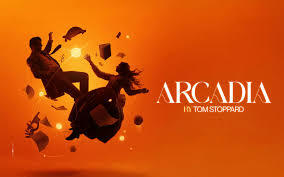
113 – Arcadia by Tom Stoppard

113 – Arcadia by Tom Stoppard

Tom Stoppard’s 1993 play, Arcadia, is viewed by many as his finest play, renowned for the breadth of its intellectual interrogations and its formal invention. The play is a structural masterpiece of ideas, as well as a teasing detective story, joyous comedy, and emotionally rich exploration of love and loss.

As we record this episode a wonderful new production of Arcadia is playing at the Duke of York’s theatre in London’s West End, following its acclaimed run at the Old Vic theatre earlier this year. I am delighted to share the challenge and the pleasure of exploring Stoppard’s dazzling drama with the director of the new production, Carrie Cracknell.

Conor McPherson

Conor McPherson

Conor McPherson

Conor McPherson is from Dublin and began writing plays as a member of the University of Dublin drama society. His early plays include St Nicholas, Shining City, The Seafarer, and The Weir, which opened at the Royal Court before transferring to the West End of London and Broadway, winning the Olivier Award for Best New Play for 1999. It was produced again in the West End in 2013. In 2011 the National Theatre in London premiered his play The Veil, which marked his first foray into period drama and was greeted by critical acclaim.

More recently, following Girl from the North Country, Conor’s wonderfully lucid adaptation of Chekhov’s Uncle Vanya was staged in the West End, and broadcast on BBC in December 2020, and on PBS in America in the Spring of 2021. Conor’s adaptation was the inspiration for our episode on Uncle Vanya, in which we talked with Nick Hern the publisher of his version of the play.
Click here to listen to that episode.

Recommended Play(s)

Conor recommended The Wexford Trilogy by Billy Roche.


028 – Girl from the North Country by Conor McPherson, music and lyrics by Bob Dylan

028 – Girl from the North Country by Conor McPherson, music and lyrics by Bob Dylan


028 – Girl from the North Country by Conor McPherson, music and lyrics by Bob Dylan

Conor McPherson’s Girl from the North Country is an extraordinary collaboration between the playwright and musician and song writer Bob Dylan. In fact it was a silent collaboration of sorts, as Dylan granted McPherson carte blanche to create his play around his music without any direction or constraints. The result is a magical work where McPherson’s portrait of families struggling to find hope or security in Depression America is transfigured into an uplifting spiritual experience by the ravishing period arrangements of Dylan’s songs.

The play, directed by McPherson, opened at the Old Vic Theatre in London in 2017 to a rapturous response and reviews, including acclaim such as: “Not very often, a piece of theatre comes along that radiates an ineffable magic.” ; “Beguiling and soulful and quietly, exquisitely, heartbreaking. This is, in short, a very special piece of theatre.” 

The Old Vic production was followed by two West End runs and transfers to off-Broadway and Broadway in New York. It garnered many award nominations here and in America, winning several, although I can’t help but think it would have swept the board if it fit more easily into the conventional award categories of play or musical. But as the reviews suggest, it is something very special, which I can personally attest to because I’m happy to confess that Girl from the North Country moved me to tears both times that I saw it.

So this is a very special episode, first because I am privileged to talk with none other than the play’s author Conor McPherson, and secondly because we have also been given kind permission to include several extracts from the original cast recording of the music from the first London production. You can listen to the whole album on Spotify by following this link to the London production.

Note: this episode contains a couple of instances of strong language (among all of its beauty!).

Conor McPherson

Conor McPherson is from Dublin and began writing plays as a member of the University of Dublin drama society. His early plays include St Nicholas, Shining City, The Seafarer, and The Weir, which opened at the Royal Court before transferring to the West End of London and Broadway, winning the Olivier Award for Best New Play for 1999. It was produced again in the West End in 2013. In 2011 the National Theatre in London premiered his play The Veil, which marked his first foray into period drama and was greeted by critical acclaim. More recently, following Girl from the North Country, Conor’s wonderfully lucid adaptation of Chekhov’s Uncle Vanya was staged in the West End, and broadcast on BBC in December 2020, and on PBS in America in the Spring of 2021. Conor’s adaptation was the inspiration for our episode on Uncle Vanya, in which we talked with Nick Hern the publisher of his version of the play. Click here to listen to that episode.

Recommended Play

Conor recommended The Wexford Trilogy by Billy Roche.

Author photo by Mel Melcon

Photo © Marc Brenner
We have footnotes for this episode …

The Footnotes to our episode on Girl from the North Country include brief thoughts on Elizabeth’s ability to see and say the truth, as well as more on the echoes of Chekhov in Conor’s play. 

Patreon Page

BECOME A PATRON!

Since I launched The Play Podcast in April 2020, I have managed to eschew any form of advertising or sponsorship, and I would like to continue to produce the podcast without doing so. I therefore invite you to help me to continue to make the podcast by becoming a Patron.
Additional benefits available to Patrons include Footnotes on the plays covered in the podcast, as well as exclusive access to The Play Review.

For details click here

Thank you very much for listening and for your support.
Douglas

The Texts
If you are interested in buying the play text or other related books, we’d be delighted if you choose to purchase them by following the links below. We will earn a small commission on every book you purchase, which helps to keep the podcast going. Through our selected partners Bookshop.org and Blackwell’s you will also be supporting independent bookshops. Thank you.
You might also be interested in …
115 – The Dance of Death by August Strindberg

115 – The Dance of Death by August Strindberg

August Strindberg’s The Dance of Death is set in a remote army base on the coast of Sweden, where an army captain and his wife are trapped together in an unhappy marriage. The captain, bitter at his lack of promotion, and his wife, frustrated at having been forced to give up her career as an actress, occupy their empty hours tearing into each other in a brutal dance of mutual cruelty.

Strindberg’s scorching portrait of marital strife was written in 1900, but has had a lasting influence. Arthur Miller dubbed Strindberg, “the mad inventor of modern theatre”, and echoes of his unflinching dissection of marital discord can be seen in the plays of Edward Albee, Tennessee Williams, Eugene O’Neill, and John Osborne.

Sir Richard Eyre adapted and directed a wonderful production of Dance of Death at the Orange Tree Theatre in Richmond upon Thames earlier this year, and I am delighted that Sir Richard joins me in this episode to guide us through Strindberg’s blistering onslaught on marriage.

114 – Love’s Labour’s Lost by William Shakespeare

114 – Love’s Labour’s Lost by William Shakespeare

William Shakespeare’s Love’s Labour’s Lost is described on the title page in the first publication of its text in 1598 as “A Pleasant Conceited Comedie.” I imagine that the epithets were intended to highlight the play’s courtly aesthetic, its frothy merry-go-round of courtship, and above all perhaps, its ostentatiously intricate word play. For it is a play rich in the love and perils of language.

I am joined to assay Shakespeare’s conceited comedy by the Artistic Director of the Orange Tree Theatre in Richmond upon Thames, Tom Littler. In the summer of 2026 Tom adapted and directed a magical double bill of Shakespeare, producing Love’s Labour’s Lost and Much Ado About Nothing in repertory, and staging them both ‘en plein air’.

113 – Arcadia by Tom Stoppard

113 – Arcadia by Tom Stoppard

Tom Stoppard’s 1993 play, Arcadia, is viewed by many as his finest play, renowned for the breadth of its intellectual interrogations and its formal invention. The play is a structural masterpiece of ideas, as well as a teasing detective story, joyous comedy, and emotionally rich exploration of love and loss.

As we record this episode a wonderful new production of Arcadia is playing at the Duke of York’s theatre in London’s West End, following its acclaimed run at the Old Vic theatre earlier this year. I am delighted to share the challenge and the pleasure of exploring Stoppard’s dazzling drama with the director of the new production, Carrie Cracknell.