Exploring the greatest new and classic plays

SUPPORT OUR PODCAST BY BECOMING A PATRON
CLICK HERE

Winsome Pinnock

Winsome Pinnock

Winsome Pinnock

Winsome Pinnock is an award-winning British playwright of Jamaican heritage.
Her plays include: Rockets and Blue Lights, A Hero’s Welcome, Talking in Tongues, Mules, Water and One Under. Her break through play Leave Taking which premiered at the Liverpool Playhouse in 1986 has been produced four times since in major UK theatres, including at the National Theatre in London, where in 1994 it was the first play written by a black British woman to have been produced there. It was revived at the Bush in 2018, and still speaks to the immigrant experience of building a life in a new country, while carrying the culture of where they came from.

Winsome has been a visiting fellow at Cambridge University, and a writer in residence at Holloway Prison, Clean Break theatre company, the Royal Court, Kuumba Arts Community Centre, the Tricycle Theatre, and the Royal National Theatre Studio.

Recommended Play(s)

Winsome recommended Misty by Arinze Kene.


014 – Rockets and Blue Lights, by Winsome Pinnock

014 – Rockets and Blue Lights, by Winsome Pinnock

Photo: c Manchester Royal Exchange

014 – Rockets and Blue Lights, by Winsome Pinnock

Playwright Winsome Pinnock cited JMW Turner’s painting The Slave Ship as one of the inspirations for her powerful new play Rockets and Blue Lights. The painting depicts a ship foundering in a tumultuous sea – at first sight a typical Turner seascape. Except if you look closely you will pick out in the foreground figures drowning in the sea. Look even more closely and you will realise that these are slaves with irons on their limbs who have been thrown overboard from the ship. The painting was based on the notorious Zong massacre of 1781, which Pinnock takes as a dramatic starting point for her thoughtful and moving re-examination of the legacy of the slave trade. The play brings some of the terrible history of the slave trade to life, to give voice to those whose record has been lost to history. It also merges the past and the present to prompt us to consider the continuing legacy of discrimination.

Rockets and Blue Lights was in preview to open at the Manchester Royal Exchange Theatre in March this year, when the Covid19 lockdown cruelly closed all of our theatres. Happily, the cast were able to re-purpose their performances to broadcast it as a radio play as part of Radio 3’s series of Plays in Lockdown transmitted over the summer. The play also received the 2018 Alfred Fagon Award, which is granted annually for the best new play by a Black British playwright of Caribbean or African descent, resident in the United Kingdom. It is particularly apt that we are talking about it during Black History Month because I am certain that this play will be performed, read and studied for many years to come.
I am especially delighted and honoured to welcome the play’s author, Winsome Pinnock to the podcast.

Winsome Pinnock

Winsome Pinnock is an award-winning British playwright of Jamaican heritage.
Her plays include: A Hero’s Welcome, Talking in Tongues, Mules, Water and One Under. Her break through play Leave Taking which premiered at the Liverpool Playhouse in 1986 has been produced four times since in major UK theatres, including at the National Theatre in London, where in 1994 it was the first play written by a black British woman to have been produced there. It was revived at the Bush in 2018, and still speaks to the immigrant experience of building a life in a new country, while carrying the culture of where they came from.
Winsome has been a visiting fellow at Cambridge University, and a writer in residence at Holloway Prison, Clean Break theatre company, the Royal Court, Kuumba Arts Community Centre, the Tricycle Theatre, and the Royal National Theatre Studio.

Recommended Play

Winsome recommended Misty by Arinze Kene.

Photo © Marc Brenner
We have footnotes for this episode …

The Footnotes to our Rockets and Blue Lights episode explore the Turner paintings that partly inspired the play, the Zong massacre that inspired Turner, the ghosts that haunt the play, and the litany of victims that Thomas pays tribute to in his closing speech.

Patreon Page

BECOME A PATRON!

Since I launched The Play Podcast in April 2020, I have managed to eschew any form of advertising or sponsorship, and I would like to continue to produce the podcast without doing so. I therefore invite you to help me to continue to make the podcast by becoming a Patron.
Additional benefits available to Patrons include Footnotes on the plays covered in the podcast, as well as exclusive access to The Play Review.

For details click here

Thank you very much for listening and for your support.
Douglas

The Texts
If you are interested in buying the play text or other related books, we’d be delighted if you choose to purchase them by following the links below. We will earn a small commission on every book you purchase, which helps to keep the podcast going. You will also be supporting an independent bookseller. Thank you.
You might also be interested in …
115 – The Dance of Death by August Strindberg

115 – The Dance of Death by August Strindberg

August Strindberg’s The Dance of Death is set in a remote army base on the coast of Sweden, where an army captain and his wife are trapped together in an unhappy marriage. The captain, bitter at his lack of promotion, and his wife, frustrated at having been forced to give up her career as an actress, occupy their empty hours tearing into each other in a brutal dance of mutual cruelty.

Strindberg’s scorching portrait of marital strife was written in 1900, but has had a lasting influence. Arthur Miller dubbed Strindberg, “the mad inventor of modern theatre”, and echoes of his unflinching dissection of marital discord can be seen in the plays of Edward Albee, Tennessee Williams, Eugene O’Neill, and John Osborne.

Sir Richard Eyre adapted and directed a wonderful production of Dance of Death at the Orange Tree Theatre in Richmond upon Thames earlier this year, and I am delighted that Sir Richard joins me in this episode to guide us through Strindberg’s blistering onslaught on marriage.

114 – Love’s Labour’s Lost by William Shakespeare

114 – Love’s Labour’s Lost by William Shakespeare

William Shakespeare’s Love’s Labour’s Lost is described on the title page in the first publication of its text in 1598 as “A Pleasant Conceited Comedie.” I imagine that the epithets were intended to highlight the play’s courtly aesthetic, its frothy merry-go-round of courtship, and above all perhaps, its ostentatiously intricate word play. For it is a play rich in the love and perils of language.

I am joined to assay Shakespeare’s conceited comedy by the Artistic Director of the Orange Tree Theatre in Richmond upon Thames, Tom Littler. In the summer of 2026 Tom adapted and directed a magical double bill of Shakespeare, producing Love’s Labour’s Lost and Much Ado About Nothing in repertory, and staging them both ‘en plein air’.

113 – Arcadia by Tom Stoppard

113 – Arcadia by Tom Stoppard

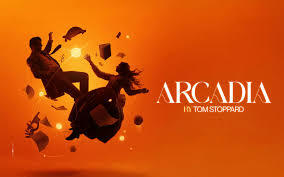
Tom Stoppard’s 1993 play, Arcadia, is viewed by many as his finest play, renowned for the breadth of its intellectual interrogations and its formal invention. The play is a structural masterpiece of ideas, as well as a teasing detective story, joyous comedy, and emotionally rich exploration of love and loss.

As we record this episode a wonderful new production of Arcadia is playing at the Duke of York’s theatre in London’s West End, following its acclaimed run at the Old Vic theatre earlier this year. I am delighted to share the challenge and the pleasure of exploring Stoppard’s dazzling drama with the director of the new production, Carrie Cracknell.